Mera Peak: Highest Trekking Peak in Nepal
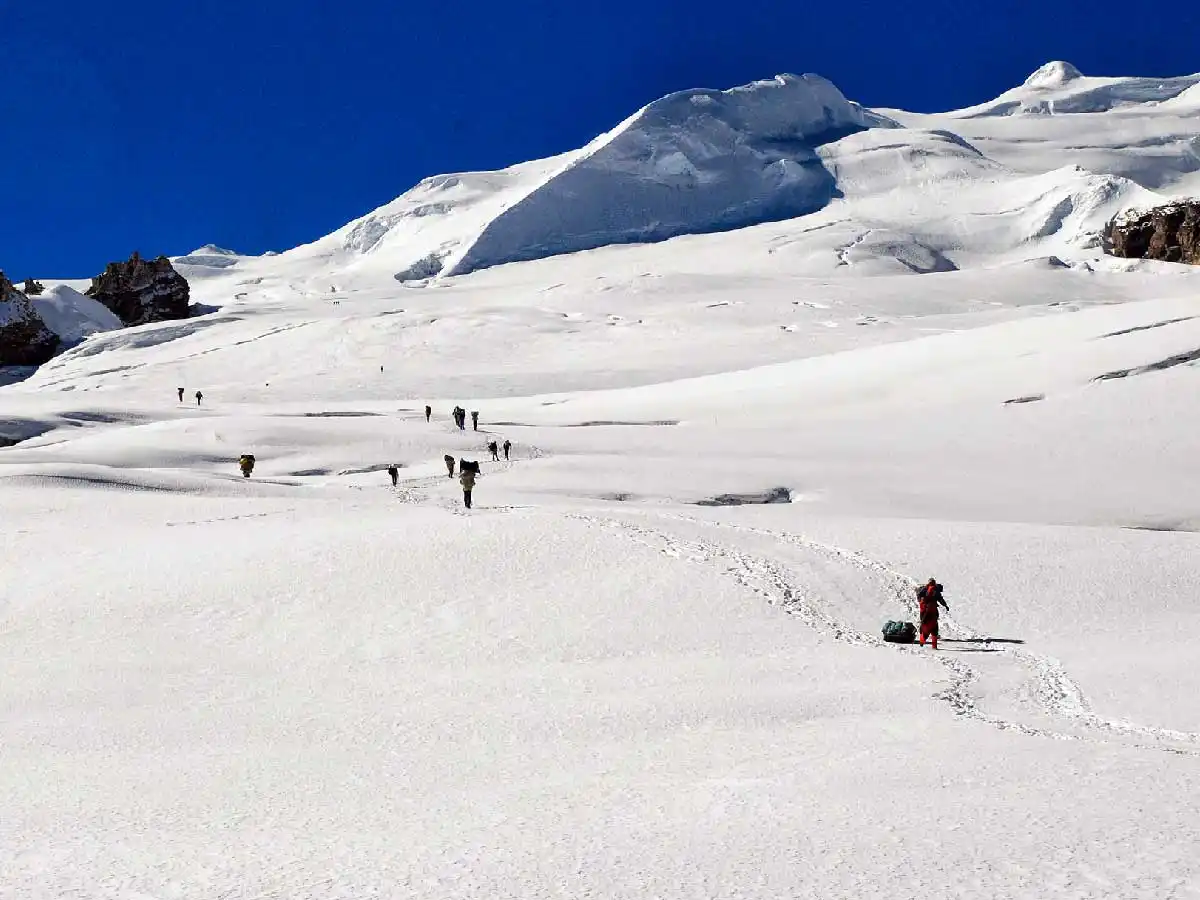
Mera Peak Climbing is a popular trekking peak adventure in Nepal for those looking for their first Himalayan summit. It is the highest trekking peak in Nepal at 6,476 meters (21,247 feet) and is located in the beautiful Hinku Valley of the Everest region. The normal route is not very technical but needs good physical condition, acclimatization, and basic mountaineering skills. It includes peaceful villages, rhododendron forests, and spectacular glacial scenery. From the summit, you can take in breathtaking views of Everest, Lhotse, Makalu, and many other Himalayan peaks. Mera Peak is an excellent introduction to Himalayan mountaineering.
Mera Peak Location
Mera Peak is located in the Mahalangur section of eastern Nepal between the Hinku and Hongu valleys. Peak climbing usually begins with a flight from Kathmandu to Lukla and a walk through the peaceful Hinku Valley with its traditional villages, rhododendron forests, and alpine meadows. While the Everest Base Camp route is bustling with trekkers, the Mera Peak trail offers a tranquil Himalayan experience with fewer trekkers and stunning scenery.
Mera Peak Climbing History
Mera Peak is one of the most popular trekking peaks of Nepal, attracting climbers from all over the world. In 1953, J.O.M. Roberts and Sen Tenzing first successfully scaled it. Above 6,000 meters, it offers the opportunity to enjoy high-altitude mountaineering without the technical difficulties of the bigger peaks. It’s a perfect choice for getting the skills in crampons, ice axes, and glacier travel before heading for more challenging mountains. The Mera Peak has three main peaks: Mera North, Mera Central, and Mera South. The most climbed of these is Mera Central.
Best Season to Climb Mera Peak
The prime time to climb Mera Peak is during the spring months of April and May and the autumn months of late September through November. Spring has warm temperatures, excellent visibility, and rhododendrons in bloom. Autumn has dry weather and clear skies for spectacular views of the Himalayas. Autumn is a busy trekking season in Nepal, but the Mera Peak route is less crowded than the trail to Everest Base Camp. In contrast, the monsoon (June to August) has rains and low visibility, and winter has frigid temperatures and heavy snow, making the climb difficult. Generally, spring and fall are the best times to climb.
Mera Peak Climbing Difficulty
Mera Peak is a moderately challenging trekking peak that rises to 6,476 meters. Climbers are exposed to high altitudes, cold temperatures, and steep snow slopes. The trail involves walking on snow and glacier terrain with crevasses and fixed ropes and requires basic mountaineering skills such as crampons and ice axes. Previous high-altitude experience is a plus but not essential. Mera Peak provides a rewarding introduction to Himalayan climbing if you are fit, acclimatized, and accompanied by experienced guides. The west and south faces are more technical and for experienced mountaineers.
Mera Peak Climbing Route
Mera Peak climbing begins with a flight from Kathmandu to Lukla and a walk through the beautiful Hinku Valley. The trail goes through villages such as Paiya, Kothe, and Khare, where trekkers can acclimatize and enjoy a variety of landscapes. At Khare, climbers hone their mountaineering skills before moving to Mera Base Camp and Mera High Camp. Usually the summit attempt is done from midnight, and the climbers go to Mera Central at 6,476 meters. The climb is rigorous, but the summit offers spectacular views of Mt. Everest, Lhotse, Makalu, and other famous mountains. After enjoying the summit, climbers descend back through the Hinku Valley and return to Lukla for their flight back to Kathmandu.
Why Choose Mera Peak Climbing?
Mera Peak is a fantastic choice for trekkers and novice climbers who want the Himalayan mountaineering experience without having to tackle a highly technical mountain. It is the highest trekking peak in Nepal at 6,476 meters and a good introduction to climbing above 6,000 meters. The trek leads you through the peaceful and less crowded Hinku Valley, with beautiful rhododendron forests, alpine meadows, remote mountain valleys, glaciers, and fantastic Himalayan scenery. From the summit you will enjoy spectacular views of Mount Everest, Lhotse, Makalu, Cho Oyu, Kanchenjunga, Ama Dablam, Baruntse, Chamlang, and many other peaks. You also get the opportunity to learn and practice basic mountaineering skills along the way, like the use of crampons, axes, ropes, and other climbing gear. Mera Peak is also a valuable stepping stone for climbers who plan to attempt more technical or higher Himalayan peaks in the future. More than just summiting, it is an opportunity to build confidence at high altitude, experience remote Himalayan landscapes, and enjoy a genuine trekking and mountaineering adventure away from the busiest Everest trails.
Why Choose Ethic Himalaya for Mera Peak?
Choosing the right climbing company is essential for a safe and enjoyable Mera Peak expedition. At Ethic Himalaya we offer a well-organized, personal experience from your arrival in Kathmandu to the summit and back. Our local guides have experience and hold government licenses. They know the Mera Peak route and will always take the best care of your acclimatization, safety, and support throughout your journey. Our groups are small enough to provide personal attention to each climber. We want you to not only reach the summit of 6,476 meters but also enjoy the journey and return home with memories you will never forget. We do all of this with carefully planned itineraries, quality climbing support, and a commitment to responsible travel.